Exposing NYC Shelter System Failures:New York City shelter system
Discover an eye-opening personal account that reveals the struggles and challenges faced by the homeless within New York City's shelter system. This insightful narrative sheds light on the failures of NYC shelters and the urgent need for reform.New York City shelter system
HOUSING CRISIS
Lyon A Brave
11/23/20258 min read
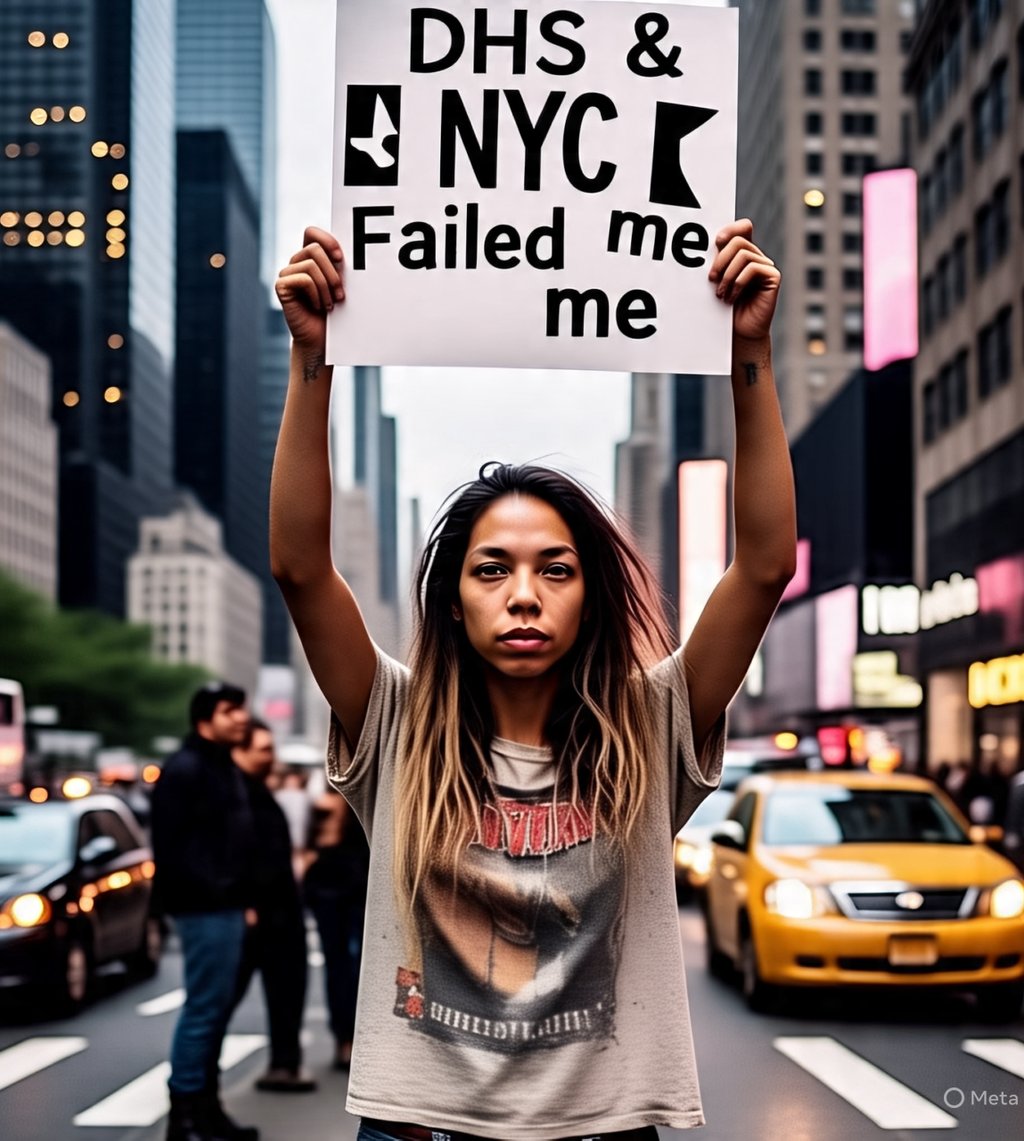
Indignity Behind the Doors: A Personal Account of How New York City’s Shelter System Fails the People It Claims to Serve
By Lyon Amor Rbave
---1. The Numbers Behind the Narrative
As of spring 2025, New York City’s Department of Homeless Services (DHS) reports more than 85,000 people sleeping in its shelters each night—a record high. Roughly 60 percent are families with children. Among adults in shelters, about one‑third are women, many survivors of domestic violence or people managing health challenges while trying to rebuild their lives. It's important to understand only 23% of NYC's homeless are sleeping at the shelters, that's why there are so many sleeping on the trains and many others hidden.
These numbers represent only part of the crisis. Advocacy groups estimate another 4,000–6,000 people live each evening outside of shelters—on trains, in subways, in hospitals,. Despite record budgets, the city’s vast shelter network continues to expand faster than its ability to provide humane care.
The statistics may sound clinical, but they correspond to real experiences: people caught in an endless loop of intake offices, temporary beds, and bureaucratic barriers. For many, entering a shelter feels less like relief and more like losing the last fragment of control over one’s life.
I know, because I’ve been there.
---
2. Entering the System: From Crisis to Custody
When you arrive at a DHS intake center, you’re already at your most vulnerable. You’ve lost your home, your privacy, and often your sense of safety. Yet the intake process treats you as a potential problem before it treats you as a person.
At Brooklyn’s women’s intake center, residents line up under fluorescent lights, waiting to be screened. Metal detectors frame the doorway. Security guards eye every bag. You’re searched, questioned, and assigned a bed somewhere you’ve never been.
Formally, this is about safety. Emotionally, it feels like processing—more prison than protection.
The staff operate with a posture of suspicion rather than support, and that suspicion defines what follows.
---
A Pipeline of Punishment
People like to call it the “shelter‑to‑jail pipeline.” It’s harsh, but fitting.
Clients who question staff decisions are quickly labeled “aggressive.” Once that word appears in your file, every future complaint, no matter how polite, carries the same suspicion.
A raised voice can prompt a call to the NYPD. A disagreement about curfew can become “non‑compliance.” Recurring tension sometimes ends with involuntary psychiatric referrals.
Instead of crisis de‑escalation, we face escalation.
It’s a pipeline not because shelter staff want to punish, but because the culture rewards control over compassion. The city’s larger systems—police, hospitals, courts—absorb the fallout while residents lose faith that anyone in power truly intends to help.
---
4. Women on the Edge of Credibility
For homeless women, the experience is uniquely punishing.
Before we open our mouths, many staff assume we’re unstable. The stereotype of the “crazy homeless woman” is the lens through which staff and police interpret every word and gesture.
This bias has real consequences. If we cry, we’re dramatic. If we assert boundaries, we’re combative. If we stay silent, we’re uncooperative. The result is a self‑fulfilling prophecy where being homeless automatically means being suspect.
I’ve watched women in line beg for medical care or help with medication, only to be brushed off until they “calmed down.” I’ve seen others embarrassed in front of peers for asking for hygiene products or clean clothing.
Homelessness strips individuals of privacy; the shelter system too often strips them of dignity.
--
5. My Night at Brooklyn Intake
When I first arrived at Brooklyn’s women’s intake shelter, I expected bureaucracy, not hostility. The manager on shift greeted us with mocking sarcasm as if empathy were forbidden. Every question she answered became a confrontation; each attempt to advocate for ourselves risked punishment.
The residents were exhausted women carrying bags of everything they owned. Some were survivors of violence; some were recent evictees. What they needed was human decency. What they got was derision.
That first night convinced me that the crisis wasn’t just underfunding—it was the absence of compassion.
---
6. The Professionalism Gap
Working with people in trauma requires skill, patience, and emotional intelligence. Yet many DHS‑contracted shelters hire workers with minimal qualifications and almost no mental‑health training.
A GED or high‑school diploma may open the door to a job as a “residential aide.” Supervisors are often promoted internally without leadership development.
This lack of training has consequences:
- Conflicts escalate instead of being resolved.
- Staff misinterpret mental‑health symptoms as disrespect.
- Residents stop reporting abuse because complaints lead to retaliation.
Funding flows through multiple nonprofit contractors, and accountability dilutes along the way. The city measures success by bed counts, not by atmosphere or outcomes.
The result? A revolving door staffed by people who are under‑supported and overwhelmed, managing residents who feel powerless and invisible.
---
7. Retaliation as Culture
In many shelters, retaliation replaces dialogue.
If you file a grievance, your caseworker may stop returning calls. If you request a new room, you risk transfer to a less desirable location. Women whisper warnings about which staff to avoid, which rules are flexible, which comments will get you labeled “a problem.”
Officially, DHS has a grievance system. Practically, few use it.
Every step of the complaint process depends on the same staff responsible for the behavior you’re reporting.
When those reports vanish—or come back “unsubstantiated”—residents learn the same lesson: silence is safer than asserting your rights.
---
8. The Broader Systemic Picture
New York spends nearly $4 billion annually on its homeless‑services network. Much of this funding goes to private contractors that operate hundreds of shelters across the city. Despite audits and hearings, oversight remains fragmented among DHS, nonprofit boards, and city council committees.
Advocates have long documented issues of verbal abuse, retaliation, and unsafe conditions. A 2024 City Council report found that 63 percent of surveyed residents felt “disrespected or unsafe” in at least one shelter placement, and only 22 percent knew how to file a formal complaint.
These are not isolated failures—they indicate a pattern of institutional neglect.
---
9. The Cost of Indifference
Every time a shelter resident is dismissed, belittled, or threatened with police action, the system pushes them farther from stability. Many women leave shelters altogether, choosing subways or abandoned buildings over constant humiliation. That exodus exacerbates street homelessness, which the city then tries to police.
It’s a cycle of harm that masquerades as help:
Neglect → retaliation → flight → criminalization.
From a policy standpoint, that cycle is expensive. From a human standpoint, it’s devastating.
---
10. Trauma Meets Bureaucracy
Shelter rules are rigid—check‑ins by 10 p.m., limits on visitors, constant inspections. These structures might maintain order, but they often disregard trauma realities.
A survivor of violence who panics around male guards may be punished for “refusing inspection.”
A resident coping with anxiety may miss curfew after a triggering appointment and face sanctions.
When behavior is understood only through compliance, not context, punishment becomes policy.
---
11. The Staff Perspective
To be fair, many shelter employees work under stressful conditions. They handle high caseloads, paperwork backlogs, and limited training. Some develop compassion fatigue. Others enter with good intentions that the environment quickly erodes.
But empathy is not optional—it’s the foundation of social work.
No budget line can justify disrespect. The strain on staff cannot excuse abuse of residents.
Professional burnout should lead the city to provide better pay, training, and counseling for workers, not to accept mistreatment as inevitable.
---
12. How the Pipeline Operates
The connection between shelters, police, and hospitals is often invisible until it happens to you. Here’s how it usually unfolds:
1. A resident challenges a rule or asks for a supervisor.
2. Staff label the behavior aggressive or unpredictable.
3. Security intervenes, calling NYPD officers stationed nearby.
4. Police decide between arrest or emergency psychiatric evaluation.
Either path removes the “problem” from the shelter—temporarily improving the statistics of compliance.
But that removal represents a system prioritizing order over humanity. Instead of offering social‑work mediation or clinical assessment on‑site, shelters outsource responsibility to law enforcement.
That’s how homelessness becomes criminalized in practice, even if not by design.
---
13. The Human Toll
Every retaliatory call to police carries emotional trauma.
Imagine being awakened by officers in the middle of the night, handcuffed in front of peers, and transported to a hospital because you asked for a supervisor. Imagine returning days later to find your belongings discarded, your place gone.
These experiences reinforce the belief that no one inside the system sees you as human.
For women who already distrust institutions, the message is unmistakable: You don’t belong anywhere.
I’ve watched resilient individuals crumble under that weight. Some relapse; others disappear. You rarely see those names on success statistics.
---
14. Why the Public Rarely Hears This
Shelter contracts include confidentiality provisions that discourage workers from speaking publicly. Residents fear retaliation. Journalists need permission to enter facilities. Consequently, news coverage often focuses on numbers, not narratives.
But numbers never tell you about the humiliation of being ignored when you’re hungry or sick. They don’t tell you how exhausting it is to stay polite to survive each interaction. They can’t capture the sinking feeling that a system engineered for assistance now polices poverty.
15. Paths Toward Reform
Change won’t come from silence, but neither will it come from anger alone.
Here’s what reform could look like:
- Mandatory professional certification for all front‑line shelter employees.
- Independent ombuds offices allowing residents to file confidential complaints without retaliation.
- Public accountability dashboards tracking abuse allegations and outcomes.
- Partnerships with mental‑health professionals on‑site to reduce police involvement.
- Resident advisory boards including formerly homeless women to guide program policy.
These steps would not only restore dignity but improve outcomes: higher housing‑placement rates, fewer incidents, less staff turnover.
---
16. Lessons From History
Every generation of New Yorkers builds its shelters on the ruins of earlier failures.
In the 1980s, the modern DHS system arose from lawsuits forcing the city to provide a “right to shelter.” That right was meant as protection, not punishment. Yet forty years later, bureaucracy has replaced empathy.
Auditors have caught mismanagement at every level—from unscrupulous landlords in cluster housing to nonprofit operators that pocket millions. Each scandal prompts promises of reform, followed by familiar inertia.
The systemic disrespect persists because it’s cheaper to manage homelessness than to solve it.
-
17. What Dignity Should Mean
To restore dignity, we must reclaim basic principles:
- Respect is non‑negotiable. Politeness isn’t surplus kindness; it’s the baseline for interaction between power and vulnerability.
- Safety includes emotional safety. Being free from verbal abuse is as important as being free from physical harm.
- Shelters should heal, not humiliate. The goal is movement toward housing, not submission to authority.
True dignity begins when city policy treats homelessness as a temporary condition, not an identity requiring control.
---
18. My Continuing Journey
Since that first night at Brooklyn Intake, I’ve been moved, transferred, and evaluated countless times. Each shelter has its own culture, but the tone rarely changes. What keeps me—and many others—going is the hope that exposure leads to accountability.
Writing this is an act of self‑protection and public record.
I don’t want revenge; I want reform.
I want employees to receive real training, residents to receive real respect, and the city to treat homelessness as a social failure, not a personal one.
---
19. Beyond Blame: A Human Appeal
It’s easy to label everyone involved as villain or victim, but the truth is more layered. Shelter staff deserve support just as residents deserve dignity. Yet reforms must start with recognition: power imbalance always favors the institution. Therefore, responsibility for humanity lies with those paid to uphold it.
I’ve learned to measure decency not by policies posted on bulletin boards but by tone of voice, eye contact, and follow‑through.
When those simple gestures vanish, bureaucracy becomes cruelty.
---
20. Closing Reflection: Peace, Not Punishment
As New York enters another winter, shelters fill again. City leaders promise more beds, more funding, more oversight. But I hope they focus on something harder to quantify: respect.
Homelessness is not contagious; it’s circumstantial.
Poverty should not void a person’s right to dignity.
If the DHS system truly wants to help, it must start by listening—to the women who live its reality every night.
Shelters are supposed to bridge the gap between despair and stability. Too often, they have become another border wall in poverty’s architecture.
But I still believe change is possible, because every act of witness plants a seed.
This essay is mine.
---
Personal Account by Lyon Amor Rbave
### #HomelessRights #NYCShelters #DignityForAll #SocialJustice #WomenInShelters #Accountability #Homelessness2025 #TraumaInformedCare
---